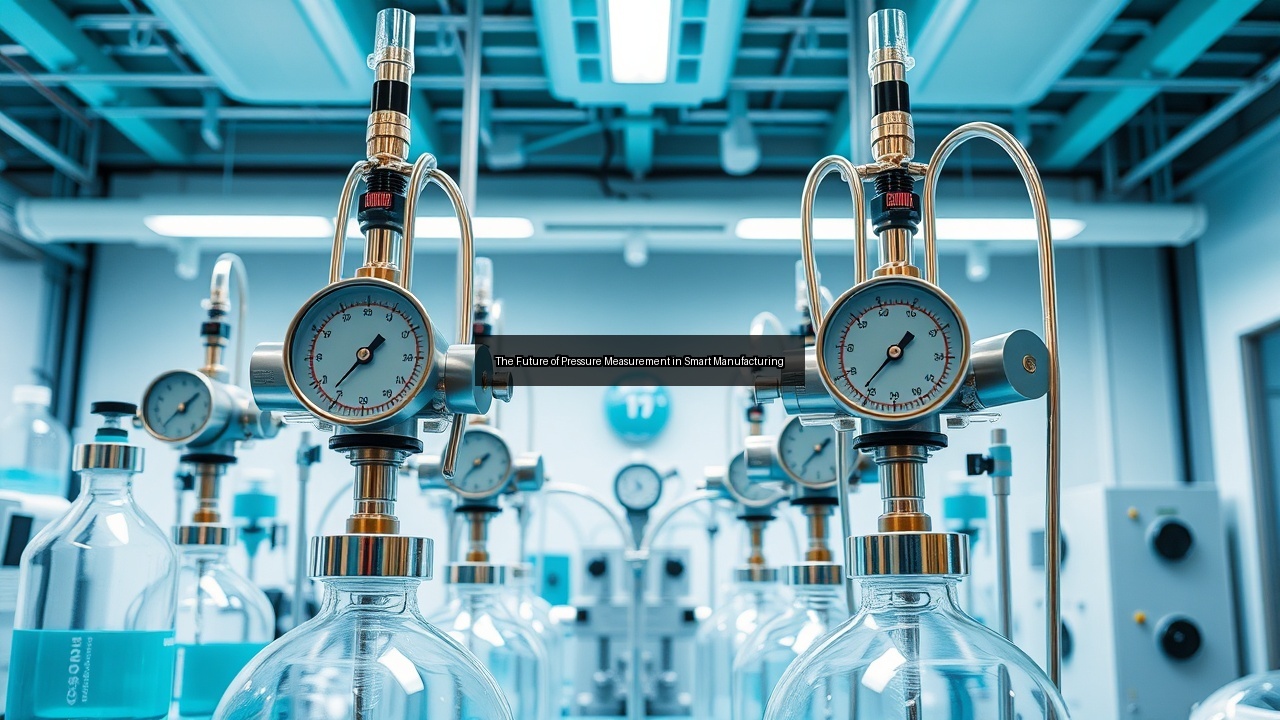
The Future of Pressure Measurement in Smart Manufacturing
Understanding Pressure Measurement Technologies
Overview of Pressure Sensors
Pressure sensors play a crucial role in various industrial applications, providing vital measurements that ensure safety, efficiency, and operational success. These sensors convert physical pressure into an electric signal, allowing for real-time monitoring and control of processes. The technology behind pressure sensors has evolved significantly, with modern devices offering enhanced accuracy, reliability, and ease of integration into automated systems. Industries ranging from manufacturing to aerospace rely heavily on pressure sensing technology to optimize performance and maintain stringent quality standards.
Additionally, the rise of automation and smart manufacturing has propelled the demand for advanced pressure sensors. These devices not only monitor pressure but also provide critical feedback for automated systems, ensuring that machinery operates within safe and efficient parameters. As industries continue to innovate, the integration of pressure sensors with data analytics and machine learning is becoming increasingly common, enabling predictive maintenance and optimizing operational workflows.
Types of Pressure Sensors: Bourdon Tubes, Transducers, and Transmitters
Pressure sensors come in multiple types, each designed for specific applications and measurement needs. Bourdon tubes are mechanical pressure sensors that utilize a coiled tube to convert pressure changes into movement, providing a direct reading on a dial. They excel in applications requiring high durability and ease of use, such as in HVAC systems and industrial machinery. However, their mechanical nature limits their ability to provide real-time data or integrate with digital systems.
Pressure transducers, on the other hand, are electronic devices that convert pressure into an electrical signal, offering greater precision and adaptability. They can be used in various environments, including those requiring high levels of accuracy like laboratory settings and aerospace applications. Pressure transmitters, closely related to transducers, transmit the converted signal to remote monitoring systems, allowing for centralized data collection and analysis. Their ability to communicate over networks makes them indispensable in modern industrial applications where real-time data is critical.
Each of these technologies has unique advantages, making them suitable for various industrial settings. For instance, while Bourdon tubes are more cost-effective for basic applications, transducers and transmitters provide enhanced functionality that meets the demands of more complex environments. Understanding the specific requirements of an application is essential for selecting the appropriate pressure measurement technology.
Differential Pressure Sensors: Applications and Benefits
Differential pressure sensors measure the difference in pressure between two points, making them indispensable in numerous applications. These sensors are vital for monitoring filters in air and fluid systems, ensuring efficient airflow, and maintaining safety in containment systems. In the oil and gas industry, for instance, differential pressure sensors help monitor pipeline integrity by detecting leaks or blockages, thus preventing hazardous situations and ensuring compliance with safety regulations.
The benefits of differential pressure sensors extend beyond safety; they also contribute to energy savings and reduced maintenance costs, making them a smart investment for any industrial operation. By providing real-time feedback, these sensors can help in optimizing the performance of HVAC systems, enhancing energy efficiency, and prolonging equipment life. Furthermore, their role in process control can lead to improved product quality, as consistent pressure levels are essential for maintaining the integrity of chemical reactions and other manufacturing processes.
The Role of Pressure Measurement in Smart Manufacturing
Integrating Pressure Sensors into Smart Systems
Integrating pressure sensors into smart manufacturing systems enhances productivity and operational efficiency. Smart factories leverage the Internet of Things (IoT) to create interconnected environments where machines, sensors, and software communicate seamlessly. Pressure sensors provide critical data that feeds into these smart systems, enabling real-time decision-making and automated adjustments. For example, manufacturing processes can adjust pressure levels instantly based on sensor readings, optimizing production flows and minimizing waste. This integration not only streamlines operations but also allows for predictive maintenance, reducing downtime and enhancing overall equipment effectiveness.
Moreover, the data collected from pressure sensors can be analyzed to identify patterns and trends, allowing manufacturers to make informed decisions about production schedules and resource allocation. This data-driven approach not only boosts efficiency but also improves product quality by ensuring that processes are operating within optimal parameters. As a result, manufacturers can achieve higher levels of competitiveness in the market.
Impact of Electric Signals on Pressure Measurement
The transformation of physical pressure into electric signals is at the core of modern pressure measurement technology. This process allows for enhanced accuracy and faster response times, essential for dynamic manufacturing environments. Electric signals enable the transmission of pressure data over long distances without loss of fidelity, facilitating remote monitoring and control. Advanced sensor technology utilizes digital signal processing to filter noise and ensure precise readings, which is critical in high-stakes environments such as aerospace and medical applications.
Furthermore, the use of electric signals allows for the integration of pressure sensors with other digital devices, creating a holistic monitoring system that can track various parameters simultaneously. This interconnectedness facilitates comprehensive data analysis, enabling manufacturers to gain deeper insights into their operations and identify areas for improvement. The integration of electric signals in pressure measurement significantly enhances the capabilities of smart manufacturing systems, allowing for nuanced control and automation that were previously unattainable.
Real-time Pressure Monitoring and Data Analysis
Real-time pressure monitoring is a cornerstone of effective smart manufacturing. Continuous pressure data collection enables manufacturers to respond swiftly to fluctuations, ensuring optimal performance and safety. By analyzing this data, companies can identify trends, detect anomalies, and predict equipment failures before they occur. Advanced analytics tools utilize machine learning algorithms to process vast amounts of pressure data, providing actionable insights that drive operational efficiency.
This capability not only improves production quality but also reduces costs associated with equipment downtime and product defects. For instance, by monitoring pressure levels in real-time, manufacturers can quickly identify when a machine is operating outside of its normal parameters, allowing for immediate intervention that can prevent costly repairs or production delays. As manufacturers increasingly rely on data-driven strategies, the role of real-time pressure monitoring becomes ever more critical, paving the way for smarter, more responsive manufacturing processes.
Future Trends in Pressure Sensing Solutions
Advancements in Pressure Sensor Technology
The future of pressure sensor technology is ripe with advancements that promise to enhance measurement capabilities and broaden applications. Innovations in materials science and microfabrication techniques enable the development of smaller, more precise sensors that can withstand extreme conditions. For instance, improved temperature compensation techniques allow pressure sensors to maintain accuracy in variable environments, which is particularly valuable in sectors like aerospace and chemical processing.
Wireless pressure sensors are also gaining traction, eliminating the need for cumbersome wiring and enhancing installation flexibility. These sensors can be easily integrated into existing systems without significant modifications, making them an attractive option for retrofitting older equipment. Additionally, the integration of energy harvesting technologies into wireless sensors is paving the way for self-sustaining pressure measurement systems, further reducing maintenance and operational costs.
These advancements pave the way for the integration of pressure sensors into more sophisticated automated systems, facilitating enhanced monitoring and control across various industries. As the demand for real-time data and increased automation grows, the evolution of pressure sensor technology will play a pivotal role in shaping the future of industrial operations.
High Vacuum and Barometric Pressure Measurement Innovations
High vacuum and barometric pressure measurement technologies are evolving rapidly, driven by the growing demand for precision in research and industrial applications. New sensor designs are emerging that offer unparalleled sensitivity and stability at extreme pressures. For instance, capacitive and piezoelectric sensors are making significant inroads in high vacuum environments, providing accurate readings that are crucial for processes such as semiconductor manufacturing, where even slight pressure variations can impact product quality.
Barometric pressure sensors are also seeing advancements, with improved accuracy and response times that are essential for meteorological applications, altitude measurements, and aviation. These innovations ensure that industries can meet stringent regulatory requirements while improving operational efficiency. Furthermore, the development of smart barometric sensors that can communicate data wirelessly is allowing for enhanced monitoring of atmospheric conditions, which is particularly beneficial in agricultural and environmental research.
The Importance of Pressure Measurement in Industry 4.0
Pressure measurement stands at the forefront of Industry 4.0, the new era of smart manufacturing characterized by automation, data exchange, and advanced analytics. As factories embrace digital transformation, the role of pressure sensors becomes increasingly integral to ensuring reliability and efficiency. Smart factories leverage pressure measurements to optimize processes, enhance product quality, and reduce energy consumption. The integration of pressure sensors with other IoT devices creates a comprehensive monitoring system that provides real-time insights and predictive analytics.
This interconnected approach enables manufacturers to respond proactively to changes, ensuring competitiveness in a rapidly evolving market. By analyzing pressure data alongside other operational metrics, companies can identify opportunities for process improvement and innovation. As the industry continues to evolve, the future of pressure measurement lies in its ability to adapt and evolve alongside the technologies that shape the landscape of modern manufacturing, paving the way for a more efficient, sustainable, and responsive industrial environment.